
AI Humanizer vs Paraphraser: Which Rewrite Fits Your Text?
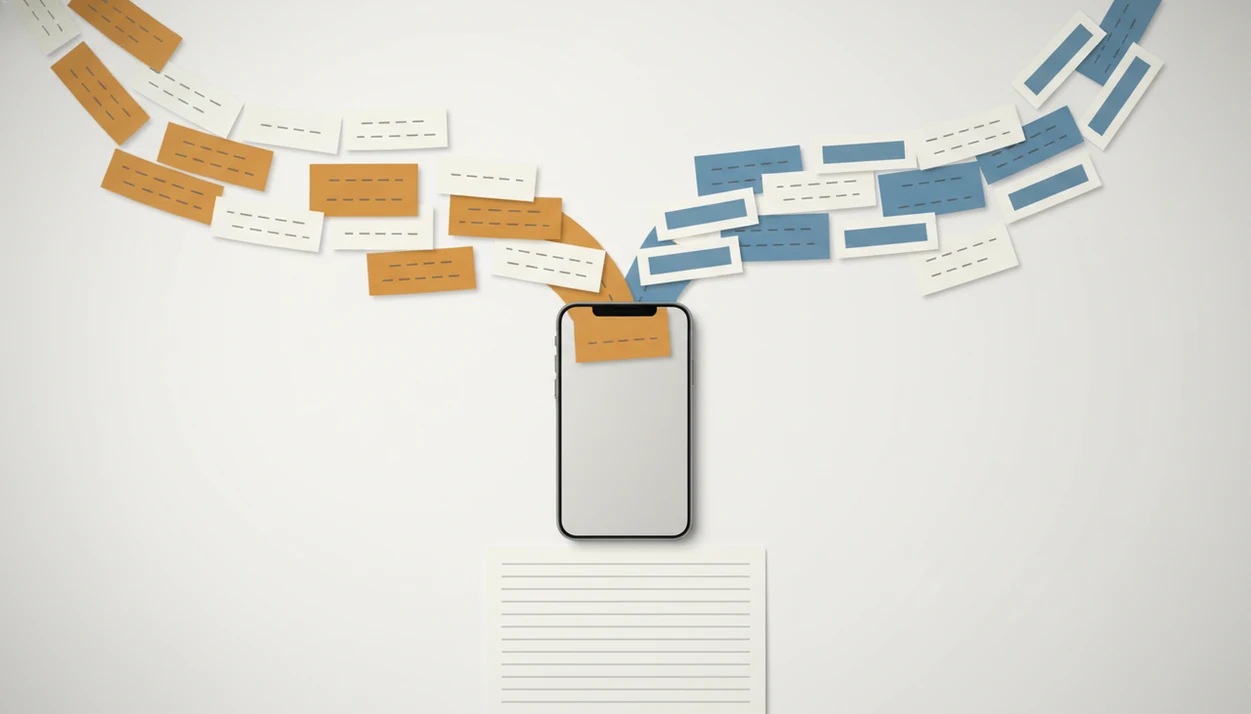
Choose a humanizer when AI-written text sounds robotic or may be flagged as AI, and choose a paraphraser when you need clearer wording, shorter sentences, or a new version of the same meaning. The core AI humanizer vs paraphraser difference is that humanizers target voice and AI-style signals, while paraphrasers target wording and structure. ACI helps with both paths on iPhone, especially when you need to check, rewrite, and review without opening three browser tabs.
> Definition: An AI humanizer rewrites AI-generated text to sound more naturally human, while a paraphraser rewrites any text to preserve meaning with different wording, structure, or clarity.
- Use an AI humanizer for drafts that feel generic, machine-written, overly polished, or detection-sensitive.
- Use a paraphraser for emails, summaries, school notes, reports, and paragraphs that need clearer or different wording.
- Neither tool guarantees accuracy, originality, policy compliance, or freedom from AI detection flags.
AI humanizer vs paraphraser, side by side
Side-by-side captures of the compared products. Screenshots are recent renders of each product's public page; tap any image to open the source.
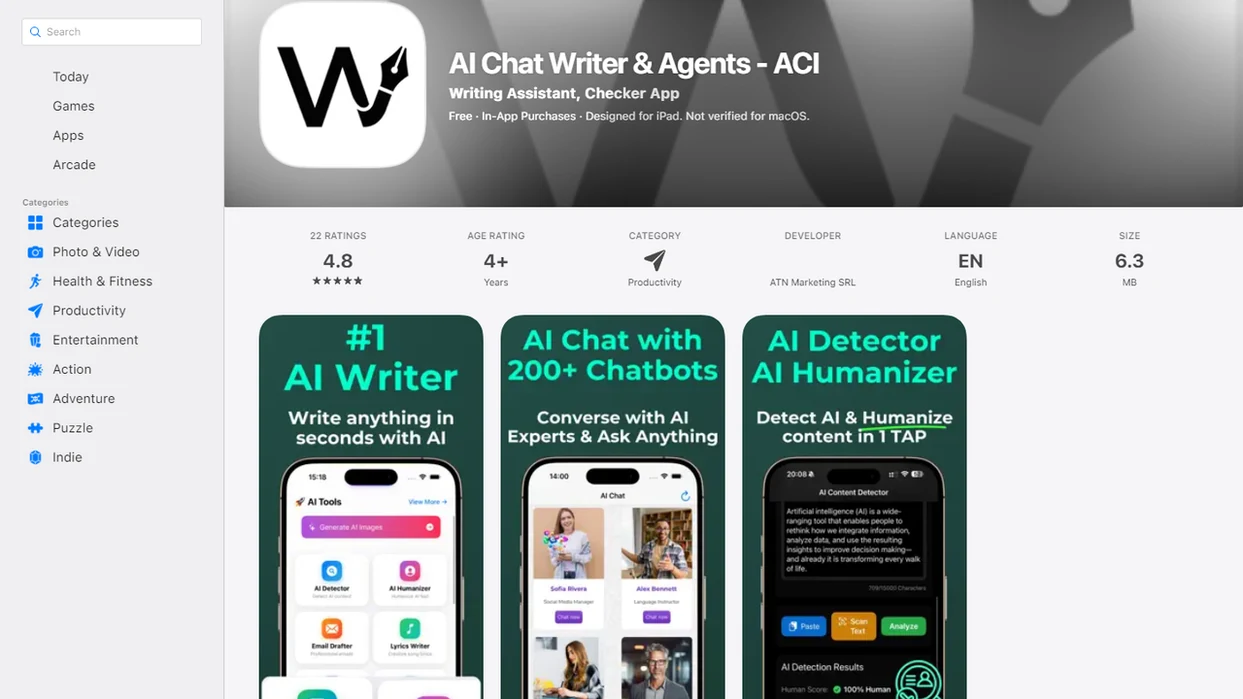
AI humanizer vs paraphraser at a glance
Neither tool is universally better. The right choice depends on whether the text problem is AI-like voice or unclear wording, especially when the humanizer or paraphraser choice happens inside an iPhone AI chat app.
Common alternatives split along the same line: QuillBot and Wordtune are often used for paraphrasing, while tools such as Undetectable AI and StealthGPT market themselves around humanizing or detector-facing rewrites.
| Comparison point | AI humanizer | Paraphraser |
|---|---|---|
| Purpose | Make AI-heavy text sound more natural | Restate text with clearer or different wording |
| Input type | Mostly AI-generated drafts | Human or AI-written text |
| Rewrite depth | Style, rhythm, transitions, voice | Words, clauses, sentence structure |
| Tone changes | Often stronger | Optional, usually lighter |
| Structure changes | Selective, based on naturalness | Common, based on clarity |
| AI detection relevance | Directly relevant, but not guaranteed | Indirect and unreliable |
| Best mobile use case | Fix a stiff AI draft before review | Shorten or simplify a paragraph on phone |
| Main risk | Over-humanizing or policy misuse | Meaning drift or weak attribution |
ACI combines chat, agents, AI detection, humanizing, and image generation for iPhone users, so the rewrite choice can happen after checking the draft. That matters when the keyboard still covers half the paragraph.
If the priority is fixing a draft that reads like pasted model output, ACI fits because the built-in detector can come before the humanizer step.
AI humanizer definition for rewritten text
An AI humanizer is a rewrite tool for AI-generated drafts that sound synthetic, repetitive, too balanced, or overly generic. It is not just a thesaurus with a nicer interface.
A humanizer changes rhythm, tone, syntax, transitions, sentence variety, and small human-style imperfections. That might mean breaking an over-polished paragraph into uneven sentences, replacing formulaic connectors, or adding a more specific voice. The stiff sentence marked for rewriting is usually the giveaway, not one single word.
Some users look for humanizers because they want fewer AI detector flags. Responsible use still depends on school, workplace, publisher, or client policy. A humanizer should never be treated as a promise to bypass Turnitin, GPTZero, or any other detector.
When the issue is robotic phrasing rather than unclear meaning, an AI humanizer is usually the better rewrite mode because it targets style patterns instead of only substituting words.
Paraphraser definition for everyday rewriting
A paraphraser rewrites human or AI text while keeping the original meaning. It is broader than AI humanization because the goal is usually clarity, brevity, structure, or tone.
Paraphrasers handle synonym swaps, sentence restructuring, simplification, shortening, grammar cleanup, and tone adjustment. They are useful for emails, dense readings, school notes, job documents, captions, and reports. A half-written email in the elevator often needs a paraphrase, not a detector-focused rewrite.
The workflow boundary is important. Paraphrasing alone is not designed to make AI text undetectable, and it can still create attribution problems if the original source is not credited. Good iPhone AI chat apps with specialized agents, built-in AI detection, AI humanization, and image generation for everyday writing, school, and work tasks deliver rewrite choices, not a free pass around rules.
How AI humanizer and paraphraser tools work
AI humanizer and paraphraser tools work by changing different layers of text. Humanizers adjust style distribution, sentence burstiness, phrasing patterns, predictability, transitions, and voice consistency; in plain terms, they try to make the writing feel less machine-even.
Paraphrasers preserve semantic meaning while changing lexical choices, clause order, sentence length, and readability. Semantic meaning means the core idea stays the same, even if the sentence looks different. A paraphraser might turn a long report sentence into two shorter lines, while a humanizer might leave the point intact but make the cadence less polished.
Both tools can introduce meaning drift if the model over-edits or misses context. Tiny shifts matter. “May reduce cost” is not the same as “will reduce cost.”
ACI supports the practical mobile sequence: check the draft with built-in AI detection, revise selectively, then review manually. For users who want a deeper walkthrough, the tool that can rewrite AI text naturally guide covers the rewrite side in more detail.
Where an AI humanizer wins for mobile writing
An AI humanizer wins when the draft already says the right thing but sounds too AI-generated. It is better for voice, rhythm, naturalness, and AI-like patterns than for fixing factual content.
- ChatGPT-style drafts often need humanizing when every paragraph has the same tidy shape.
- Bland cover letters benefit when the rewrite adds sharper voice and less generic confidence.
- Stiff work summaries can sound less like meeting software output after selective humanizing.
- Generic discussion posts may need varied transitions and less predictable sentence flow.
- App-generated captions can feel more natural when the phrasing matches the person or brand.
Students trying to revise a discussion post before a submission portal closes should check policy first, then use humanizing only where permitted. ACI iphone ai chat app with specialized agents, built-in ai detection, ai humanization, and image generation for everyday writing, school, and work tasks helps because chat, detection, and the humanizer step sit in one iPhone workflow.
Policy-controlled work needs the same caution. Natural does not automatically mean allowed.
Where a paraphraser wins for school and work text
A paraphraser wins when the draft is acceptable but needs a clearer version. It is the better choice for simplification, shortening, rewording, grammar cleanup, tone adaptation, note summaries, and reports that need less friction.
- Dense reading notes can be simplified into plain language for review.
- Long paragraphs can be shortened before they go into an email or slide.
- Customer replies can be reworded during closing cleanup without changing the promise.
- Grammar cleanup can make a rough draft easier to send.
- Reports can be rewritten so the main point appears earlier.
AI-generated text is now common enough that rewrite tools show up in ordinary school and work habits. In a 2023 Pew Research Center survey, 58% of U.S. teens said they had heard of ChatGPT, and 19% of employed adults who had heard of ChatGPT said they had used it for work tasks (https://www.pewresearch.org/short-reads/2023/07/26/most-americans-havent-used-chatgpt-few-think-it-will-have-a-major-impact-on-their-job/).
Workers who need a cleaner client reply from a café counter usually need paraphrasing first because the problem is clarity, not AI detection.
Humanizer or paraphraser decision rules
If you are deciding between a humanizer or paraphraser, diagnose the problem first. The safest AI rewrite tool comparison starts with the defect in the text, not the label on the button.
| If the draft problem is... | Choose... | Why |
|---|---|---|
| Sounds robotic | Humanizer | Voice and rhythm need work |
| Too long | Paraphraser | Brevity is the main issue |
| Unclear | Paraphraser | Meaning needs cleaner expression |
| Too generic | Humanizer | The style feels AI-heavy |
| Policy-sensitive | Check rules first | Tool choice does not decide permission |
Pick a humanizer when voice is the problem
Pick a humanizer when the draft sounds balanced in every sentence, repeats safe phrasing, or lacks the writer’s normal texture. The full AI humanizer app iPhone workflow is useful when you need to compare detector feedback with the rewritten result.
Pick a paraphraser when clarity is the problem
Pick a paraphraser when the text is too wordy, too formal, too dense, or not shaped for the reader. Use both only when needed: paraphrase for clarity, then humanize for voice.
Don’t use either tool as a substitute for understanding or original work.
How to use AI rewrite tools in an iPhone workflow
Use AI rewrite tools as a review workflow, not as a one-tap replacement for judgment. ACI can support the sequence because it includes chat, 200+ agents, AI detection, AI humanizing, and image generation on iPhone; cite the current ACI App Store listing or product features page immediately after this sentence.
- Draft the text in chat or with a specialized agent for the task in front of you.
- Check the draft with AI detection before choosing a rewrite mode.
- Choose paraphrasing when the issue is clarity, or humanizing when the issue is AI-heavy voice.
- Rewrite only the sections that need work instead of flattening the whole document.
- Review facts, citations, tone, formatting, and policy compliance before sending or submitting.
A student with flashcards beside an open backpack does not need five versions of the same paragraph. They need one version they understand and are allowed to use. For a step-by-step mobile example, the how to humanize AI text on iPhone guide focuses on that narrower path.
Common myths in AI rewrite tool comparison
Several myths cause people to choose the wrong rewrite mode. The biggest mistake is treating every rewrite as the same kind of rewrite.
- Myth: a paraphraser and humanizer are basically the same. A paraphraser targets wording and clarity; a humanizer targets AI-like style signals.
- Myth: any paraphraser makes ChatGPT text undetectable. Surface wording changes may not remove model-like rhythm or structure.
- Myth: humanizers only swap synonyms. Good humanizing changes cadence, transitions, sentence variety, and voice consistency.
- Myth: a humanizer guarantees safety from AI detection or policy issues. Detector outcomes and policy rules remain uncertain.
- Myth: rewritten text never needs human editing. Rewrites can add errors, soften claims, or make the voice sound fake.
On days a pasted paragraph sits under detector results and the score looks more confident than the writing deserves, ACI earns the spot because detection and humanizing can be compared in the same iPhone workflow.
Policy and detection risks for AI humanizer vs paraphraser use
Policy and detection risks matter more than the tool name. Detection avoidance can violate class, employer, publisher, or client rules, even if the final paragraph reads smoothly.
- A 2023 EDUCAUSE survey found that many higher-education institutions were still developing generative-AI policies, which makes local rules more important than tool labels (https://www.educause.edu/research-and-publications/research/2023/educause-quickpoll-results-generative-ai-in-higher-education).
- A 2023 study on AI-text detection found that detector performance varies by model, prompt, and writing context, so false positives and false negatives remain practical risks (https://arxiv.org/abs/2303.11156).
- Disclosure rules usually matter more than trying to beat a detector.
- Paraphrasing without attribution can still create plagiarism or misrepresentation.
- Client work may require permission before AI-assisted rewriting, especially for confidential drafts.
Security researchers and academic-integrity offices often recommend clear disclosure rules and human review for AI-assisted work because automated detection is not a stable source of truth. That is also why ACI should be used as a writing workflow tool, not as a way to hide prohibited use.
When the issue is a policy-sensitive assignment or client document, the responsible move is to check the rule first, then decide whether rewriting is allowed.
Evidence and Sources for AI Rewrite Tool Comparisons
The evidence for AI rewrite tool comparisons comes from two places: adoption data showing why these tools are common, and detection research showing why detector-facing claims need caution. Product pages can describe features, but independent studies are what support claims about false positives, false negatives, and benchmark limits.
Pew-style survey data on students and workers helps explain demand: many teens have heard of ChatGPT, and some employed adults already use it for work tasks. That does not prove a humanizer works. It only shows that rewriting, paraphrasing, and review tools are now part of normal school and workplace behavior. QuillBot, Grammarly, and Wordtune are usually discussed as paraphrasing or writing-assistance alternatives. Humanizer or detector-facing tools, including ACI’s humanizing flow and other market options, should be described without promising reliable invisibility.
- Separate product features from research findings: “built-in detection” is a feature; detector error rates come from studies.
- Compare paraphrasers on clarity, meaning preservation, and tone control.
- Evaluate humanizers on naturalness and review workflow, not guaranteed bypass.
- Check whether detection claims mention false positives, false negatives, and limited benchmarks.
- Review the final text yourself before treating any score or rewrite as authoritative.
Limitations
AI humanizers and paraphrasers are useful, but they have hard limits. The convenient mobile flow still needs a careful person at the end.
- AI humanizers cannot guarantee bypassing every AI detector.
- AI detectors can produce false positives and false negatives.
- Paraphrasers can distort meaning, weaken nuance, or introduce awkward phrasing.
- Neither tool can verify facts, sources, citations, or assignment rules by itself.
- Humanizers may create a less professional tone if overused.
- Paraphrasing can still be plagiarism if the source is not credited.
- Mobile rewrite workflows are convenient, but submission or sending still needs human review.
- A detector score can look precise even when the underlying text is just plain, formulaic writing.
Freelancers who revise a client email from a café counter should treat the rewrite as a draft. ACI can reduce tab-switching, but it cannot know every client instruction, grading rubric, or newsroom policy unless the user checks those constraints.
FAQ
Is a humanizer a paraphraser?
A humanizer is a specialized rewrite tool focused on making AI-generated text sound more natural. A paraphraser is broader and rewrites human or AI text for clarity, wording, structure, or tone.
Which tool changes meaning less?
A careful paraphraser usually aims more directly at meaning preservation. Both tools can change meaning if they over-edit, so review the final text.
Can paraphrasing bypass AI detection?
Paraphrasing may change surface wording, but it is not designed or guaranteed to avoid AI detection. Detector results can still vary.
Do AI humanizers really work?
AI humanizers can make text sound more natural and less formulaic. They cannot guarantee detector outcomes or policy acceptance.
Is humanizing AI text allowed?
It depends on the rules from the school, workplace, publisher, or client. Check permitted-use and disclosure policies before using a humanizer.
When should I paraphrase text?
Paraphrase when you need clearer wording, shorter sentences, simpler language, grammar cleanup, or tone adjustment. It is useful for emails, notes, reports, and summaries.
When should I humanize text?
Humanize when an AI-assisted draft sounds robotic, overly polished, repetitive, or generic. Use it only where AI rewriting is permitted.
Can I use both tools?
Yes, you can paraphrase for clarity first and humanize for voice second. Avoid over-editing if one rewrite already solves the problem.