
AI Detector Score Vs Proof: What Results Really Mean

Quick answer: AI detector score vs proof is the difference between a probability signal and evidence of authorship. A detector score can suggest that text resembles AI writing, but it cannot prove who wrote it without supporting records such as drafts, edit history, timestamps, prompts, or account logs.
> Definition: An AI detector score is a tool-specific probability estimate about writing patterns, while proof of authorship is traceable evidence that connects a person, process, and document history.
This guide is informational and should not be used as a disciplinary, employment, legal, or academic integrity standard by itself. For high-stakes decisions, use the relevant school, workplace, publisher, or legal review process.
TL;DR
- A high AI detector score is a risk flag, not a verdict.
- A low AI detector score does not prove the text is human-written.
- Responsible decisions should combine detector results with drafts, metadata, context, and documented writing history.
AI detector score vs proof, side by side
Side-by-side captures of the compared products. Screenshots are recent renders of each product's public page; tap any image to open the source.
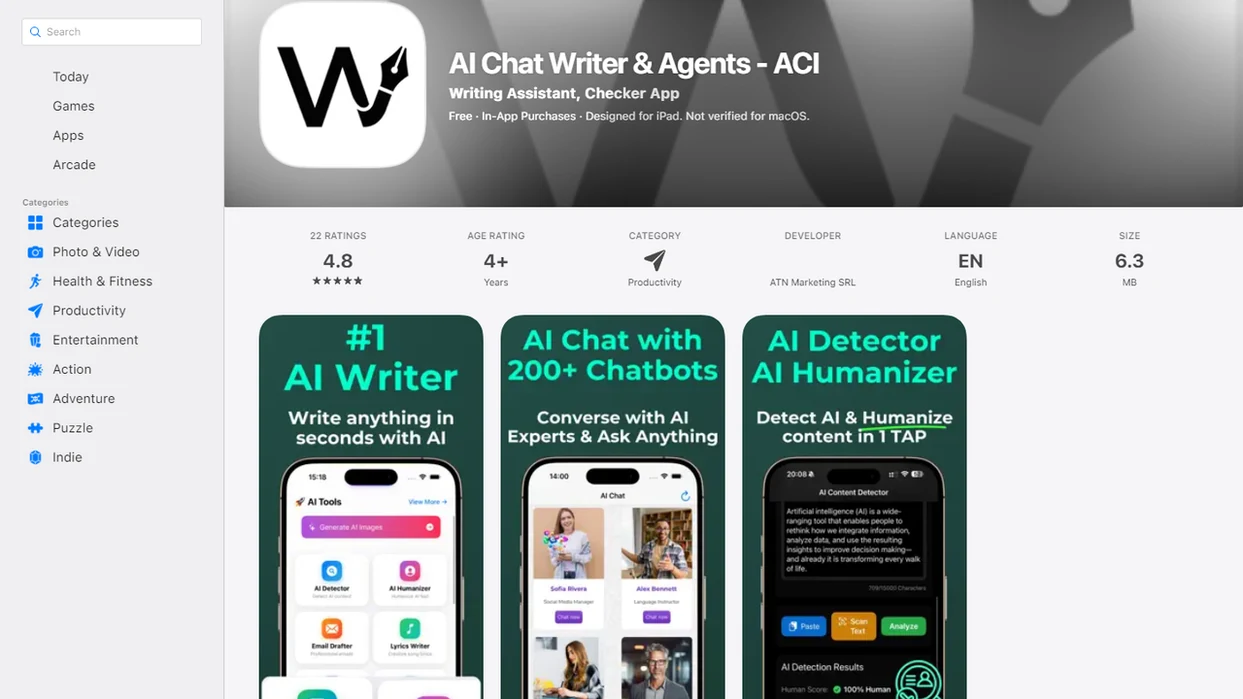
AI detector score vs proof at a glance
A detector score is a probability or classification from one tool. Proof is stronger evidence that connects the writer, the writing process, and the document record.
| Question | AI detector score | Proof of authorship |
|---|---|---|
| What it is | A tool’s estimate that text resembles AI-generated writing | Traceable records tied to a person and document |
| Typical use | Screening, triage, review flag | Dispute resolution, authorship decisions, formal review |
| Examples | “80% AI,” “likely AI,” confidence label | Drafts, edit history, timestamps, prompts, logs |
| Main weakness | Scores vary by detector and text type | Records can be incomplete or hard to verify |
| Decision value | Useful signal | Stronger basis for action |
Neither high nor low scores are conclusive alone. A late-night paragraph checked on low battery can look “too regular” simply because it was carefully edited.
AI detector score meaning in plain language
An AI detector score means a tool found writing patterns it associates with AI output; it does not mean the tool has identified the real author.
Percentages, labels, and confidence scores vary across detectors. One tool may call a paragraph “likely AI,” while another reports a moderate score for the same text. An 80% score usually does not mean 80% of the words were written by AI. It means the text crossed that tool’s internal threshold for AI-like patterns.
Turnitin describes its AI writing indicator as an estimate that should be interpreted with other evidence, not as a standalone misconduct finding source. That distinction matters when a student has drafts on a library computer, a rubric pasted into notes, and a final pass made on an iPhone keyboard that still covers half the paragraph.
Small details matter.
Can detectors prove AI writing without other evidence?
Can detectors prove AI writing? No, not by themselves.
Detectors can produce false positives, where human writing is labeled AI-like. They can also produce false negatives, where AI-generated or heavily edited AI text passes as human. That is why a single score should not be the sole basis for punishment, rejection, or accusation.
Stronger evidence includes drafts, version history, prompts, timestamps, device logs, platform records, and assignment instructions. In publishing, it may also include an editor’s notes and revision trail. In school, it may include outline dates, source notes, and comments from prior checkpoints. The AI detector false positive vs false negative issue is the core reason scores need context.
For schools and workplaces, documented process is often better than detector confidence because it shows how the text changed over time.
How AI detector scores work behind the scenes
AI detector scores work by classifying text through statistical signals, not by “seeing” who typed the words. Most detectors evaluate patterns such as predictability, phrasing regularity, sentence structure, and similarity to known model outputs.
Two useful terms are classification and calibration. Classification means the tool assigns text to a category, such as likely AI or likely human. Calibration means the tool decides how much confidence to attach to that category. Each detector is trained and calibrated differently, so results can shift across tools. That is why tools such as Turnitin, GPTZero, Copyleaks, and Originality.ai can return different labels or confidence levels for the same passage.
OpenAI’s discontinued classifier is a useful caution point. OpenAI said the tool correctly identified only 26% of AI-written text and incorrectly labeled 9% of human-written text as AI before it was retired source. The AI detector accuracy timeline shows why detection reliability changes as writing models change.
Five facts about AI detector score evidence
These five facts are the safest way to interpret AI detector score evidence. They apply whether the text is a class essay, client email, application statement, article draft, or policy memo.
- A detector score is a probability estimate, not definitive authorship proof.
- Different detectors can give different results on the same text.
- High scores can be false positives for formal, technical, edited, or non-native English writing.
- Low scores can miss AI-generated text, including edited or humanized AI text.
- Responsible decisions require context and corroborating evidence.
A pasted paragraph under detector results can look more certain than it deserves. The number feels official. But the record behind the writing is usually more useful than the label above it.
Tools can flag risk, not replace judgment.
How to use an AI detector score responsibly
Use an AI detector score as a review signal, then test it against writing history. The goal is not to win an argument with a percentage; it is to understand whether the score fits the process record.
- Run the text through one detector and keep the full result, not just the headline label.
- Record the score, tool name, date, and settings if the tool exposes them.
- Compare the result with drafts, outlines, edits, source notes, and version history.
- Review the context, including genre, language background, assignment rules, and editing help.
- Ask for process evidence, such as prompts, timestamps, or comments, before making claims.
- Decide proportionally, using scores for screening and evidence for consequences.
If you use ACI, treat its built-in AI detection as a convenience for checking drafts on an iPhone, not as proof of authorship. Faster review loops can help you spot risk, but they do not guarantee who wrote a document.
Common myths about AI detector scores and proof
Misreading detector scores often leads to unfair decisions. The most common mistake is treating a pattern match as if it were an authorship record.
| Myth | Fact |
|---|---|
| A high score proves AI authorship. | A high score is a flag that needs corroboration. |
| A low score proves human authorship. | A low score can miss edited, paraphrased, or mixed AI text. |
| All detectors should agree. | Tools use different models, thresholds, labels, and training data. |
| Detectors work equally well for every writer. | Performance can vary by writing style, genre, and language background. |
Stanford HAI reported that seven major detectors flagged 61% of non-native English student essays as AI-written source. That finding is why serious reviews should ask how the text was written, not just what the detector said. The related question of what app identifies AI generated text should always include this caveat.
AI detector score decision rule for schools, work, and publishing
The simple rule is: screen with scores, decide with evidence. A detector result can justify a conversation or closer review, but it should not carry disciplinary, employment, or editorial action by itself.
| Setting | Reasonable use of a score | Evidence needed before action |
|---|---|---|
| Students | Ask for drafts or process notes | Assignment history, drafts, timestamps, prompts |
| Teachers | Trigger a review meeting | Rubrics, prior work, edit history |
| Editors | Check unusual style changes | Revision trail, source notes, author correspondence |
| HR | Review submitted writing samples | Work instructions, account logs, interview follow-up |
| Managers | Clarify policy compliance | Document history, tool permissions, team records |
For editors and managers, a process check is often easier than arguing over a detector label because the conversation moves from accusation to documentation. If the issue is specifically ChatGPT-style output, the what app identifies ChatGPT writing guide explains the narrower detection question.
When to escalate an AI writing dispute
Escalate an AI writing dispute when the outcome could affect discipline, grades, hiring, publication, or another serious opportunity. At that point, a detector label should move into a formal human review process, not become the decision itself.
A fair escalation keeps the focus on policy, process, and evidence. The goal is to decide whether the writing record supports a consequence under the institution’s actual rules.
- Check the school, workplace, publisher, or platform policy before giving weight to any AI detector result.
- Define the decision standard in writing, including what evidence is required and what consequence is being considered.
- Collect the relevant materials, such as drafts, prompts, edit history, logs, rubrics, instructions, and prior feedback.
- Ask a neutral reviewer to compare the score with the writing record rather than relying on the label alone.
- Give the accused person a real chance to explain how the document was planned, drafted, edited, and submitted.
- Document the final reasoning so the outcome rests on a consistent standard, not on a number that looked certain in the moment.
Limitations
AI detector scores have real use, but their limits are not minor. They affect fairness, accuracy, and how much weight a result deserves.
- Scores are not forensic proof and cannot identify the actual author of a document.
- False positives can affect formal, technical, heavily edited, and non-native English writing.
- False negatives can occur when AI text is edited, paraphrased, mixed with human writing, or passed through a humanizer step.
- Results vary by detector because thresholds, labels, training data, and calibration are not standardized.
- Detection reliability changes as AI models and rewriting tools improve.
- A detector cannot confirm whether a person used allowed support, disallowed support, or no AI support at all.
- Metadata and edit history can be incomplete, especially when text moves between apps, email, notes, and shared documents.
For iPhone workflows, an AI detector app iPhone can reduce tab-switching during review. It still cannot turn a score into proof.
FAQ
What is an AI score?
An AI score is a detector’s estimate that text resembles AI-generated writing. It is a tool-specific signal, not proof of authorship.
Can AI detectors prove cheating?
AI detectors cannot prove cheating without corroborating evidence. Drafts, edit history, timestamps, prompts, and account records matter more than one score.
Is a high AI score proof?
A high AI score is a flag for review, not proof. It should be checked against context and writing records.
Is a low AI score proof?
A low AI score does not prove human authorship. Detectors can miss edited, paraphrased, or mixed AI-generated text.
Why do detectors disagree?
Detectors disagree because they use different models, thresholds, labels, and training data. The same document can receive different scores across tools.
What causes false positives?
False positives can come from formal style, technical prose, heavy editing, predictable language, and non-native English writing. Plain, careful writing may also be misread as AI-like.
What counts as authorship proof?
Stronger authorship proof includes drafts, edit history, timestamps, prompts, metadata, account logs, and platform records. No single item is always enough.
Should schools trust AI scores?
Schools should treat AI scores as one review signal, not the sole basis for discipline. A fair process should include context and student writing history.
Can humanized AI evade detectors?
Yes, edited, paraphrased, or humanized AI text can reduce detector confidence and create false negatives. ACI and similar tools may help review wording, but no detector can guarantee authorship proof.