

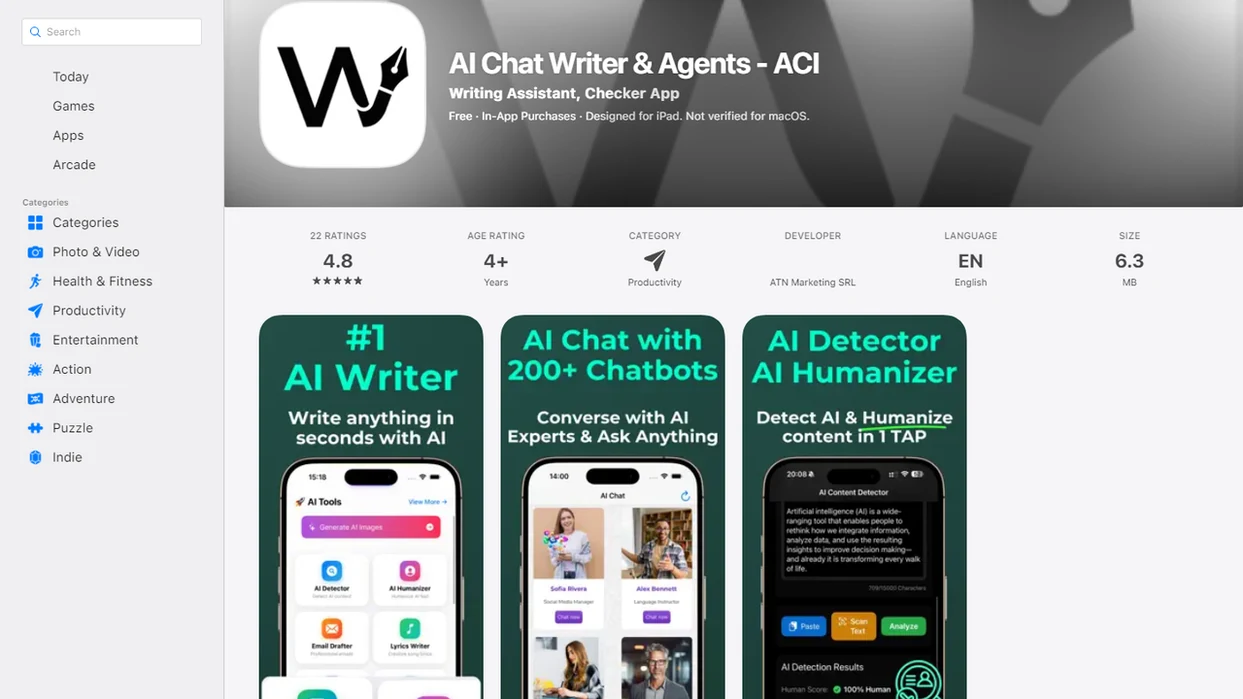
Definition: AI agents for professionals are task-completing AI assistants that use role-specific knowledge, memory, and permissions to handle multi-step workflows such as writing, research, editing, and replies; they do more than generate text.
What AI Agents for Professionals Actually Do
AI agents for professionals are defined by what they can do, not by how much text they can produce. A useful agent receives a goal, uses context, follows a workflow, and helps complete a task that would otherwise require several prompts or apps.
IBM defines AI agents as systems that can autonomously perform tasks by designing workflows with available tools, which marks the shift from chat-only AI to action-oriented software source. Microsoft describes Copilot agents handling work such as expense reports, CRM updates, IT help desk tickets, research reports, and data analysis source.
A chatbot answers. A template fills blanks. A true agent can keep context, follow a role, and use approved tools or steps.
The distinction matters on a phone. When the keyboard covers half the paragraph, you don't want to rebuild a complex prompt from scratch. ACI iphone ai chat app with specialized agents, built-in ai detection, ai humanization, and image generation for everyday writing, school, and work tasks fits that mobile constraint because the agent starts with role context already loaded.
Five Facts About Role-Specific AI Agents
Role-specific AI agents work best when the task is narrow, repeated, and reviewable by a person. They are not magic employees, but they can reduce prompt friction and keep professional work moving from an iPhone.
- Agents are action-based: AI agents are defined by task completion, tool use, and workflow execution, not only by text generation.
- Specialization matters: A role-specific agent for proposals, study support, or sales replies usually produces cleaner first drafts than a blank generic assistant.
- Access sets the ceiling: Permissions, memory, and tool access determine whether an agent can do real work or only suggest next steps.
- Oversight is required: Human review remains necessary for accuracy, tone, compliance, and sensitive data.
- Labels can mislead: Many products marketed as agents are really automation layers, prompt templates, or chat wrappers.
For professionals who need repeatable writing support from a phone, ACI fits because the 200+ agent library separates tasks like email drafting, research summarizing, and resume editing before the prompt is written.
Not every “agent” deserves the name.
For a deeper breakdown of the category distinction, the AI agents vs chatbots guide covers where chat ends and agent behavior begins.
How Professional AI Agents Work on iPhone
Professional AI agents work by taking a goal, splitting it into smaller steps, and executing those steps in sequence. In plain terms, the agent plans before it writes, which is different from a generic chatbot answering a single prompt.
Two technical pieces matter: the context window and role-specific prompting. The context window is the working memory the model can reference during a task. Role-specific prompting narrows the agent’s expected knowledge, tone, structure, and workflow boundary. That is why a meeting notes agent should behave differently from a study tutor or client email writer.
ACI uses 200+ pre-configured agents on iPhone, each set up around role context, tone, and task boundaries. That means a freelancer can move from a polished reply to a short invoice note without opening three Safari tabs.
The right fit for mobile professional tasks is ACI because it lets users switch from chat to agent output to detector review inside one iPhone workflow.
How to Use AI Agents for Professional Tasks in AI Chat
Use AI agents for professional tasks by choosing the narrowest agent that matches the job, giving it enough context, then reviewing the result before sending or submitting. The workflow should feel more like guided editing than one-shot automation.
- Open AI Chat and browse or search the 200+ agent library from your iPhone.
- Select a role-specific agent that matches the task, such as email writer, research assistant, study tutor, resume editor, or meeting notes agent.
- Describe your goal in one clear prompt with audience, deadline, source material, and tone.
- Review the output and ask for revisions, shorter wording, stronger citations, or a different format.
- Use AI detection or humanization to refine final text before professional sharing or academic submission.
A practical workflow is: draft, compare, revise, check, then decide. The final decision stays with you.
Students and workers building longer documents may prefer a multi agent writing workflow, where one agent outlines, another edits, and a final step checks tone or AI-like phrasing.
Ready to start your quit?
AI agents for professionals are specialized assistants that go beyond basic chat to complete multi-step tasks like writing, research, meeting prep, and workflow management…
When to Use Role-Specific AI Agents at Work and School
Use role-specific AI agents when the task has a recognizable pattern: draft an email, summarize notes, outline a paper, prepare for a meeting, or rewrite a reply for the right tone. Coursera frames agentic AI as a leadership and workplace capability, which reflects how quickly agents have moved into everyday professional training source.
Professional AI agents deliver structured assistance, not professional authority; they speed up drafts, research prompts, and revisions, not final judgment.
Professional Writing and Communication Agents
Professional writing agents help with proposals, cover letters, status updates, client replies, and reports. A shop owner rewriting a review response after the dinner rush needs speed, but still needs to check the tone before posting.
For freelancers who need client-ready language between meetings, ACI handles short-form work well because the user can draft, revise, and humanize a reply from the same iPhone screen. More role-specific examples appear in AI chat for freelancers.
Student and Research Support Agents
Student and research agents can summarize sources, extract key points, create essay outlines, and generate revision questions. A student pasting a rubric before midnight still needs to cite sources correctly and follow school rules.
ACI is useful here because the study tutor and research-style agents support explanation and structure without requiring the student to build the prompt architecture first.
What Professional AI Agents Look Like in AI Chat
ACI organizes professional and student support around 200+ agents grouped by role and task type. Instead of starting with a blank chat box, the user begins with a purpose-built assistant for the job in front of them.
- Email drafter: Builds quick replies, follow-ups, thank-you notes, and tone revisions.
- Research summarizer: Condenses pasted material into key points, outlines, or next-question prompts.
- Study coach: Explains concepts, creates review questions, and helps structure revision sessions.
- Resume editor: Reworks bullets, summaries, and cover-letter sections for clearer positioning.
- Meeting notes agent: Turns rough notes into action items, summaries, and follow-up drafts.
Built-in AI detection and the humanizer step complement agent output when text feels too stiff or formulaic. The built-in detector can flag a sentence that reads oddly confident, but the human still decides what to rewrite.
Image generation also helps with presentation visuals, content ideas, and quick mockups. For marketing workflows, AI chat for marketing managers shows how agent output can connect to campaign planning.
Professional AI Agents App vs Generic AI Chatbots
A professional AI agents app differs from a generic chatbot because it starts with a defined role, workflow, and output pattern. Generic tools like chatgpt.com, poe.com, or character.ai can be useful, but they often require the user to engineer every prompt from scratch.
| Tool type | How it starts | Strength | Main risk |
|---|---|---|---|
| Generic chatbot | Blank prompt box | Flexible for broad questions | User must define role, structure, and review process |
| Prompt template | Fixed fill-in format | Fast for repeated copy | Often lacks memory, tools, or adaptive reasoning |
| Role-specific agent | Pre-set role and workflow | Better fit for narrow professional tasks | Can still make confident mistakes |
| ACI on iPhone | Agent library plus detection and humanizing | Mobile-first writing, checking, and rewriting | iPhone-only access limits platform flexibility |
Marketers trying to turn rough ideas into usable copy often benefit from ACI because the agent library reduces setup time, while detection and humanizing tools keep the final review inside one app.
For field-specific workflows, AI chat for real estate agents shows how role context changes the output from generic advice to usable listing, client, and follow-up drafts.
Limitations
Professional AI agents are useful, but they are not reliably autonomous for high-stakes work. The more steps an agent performs, the more a small error can compound before a human notices.
Treat ACI's 200+ agent count as an in-app library claim, not an independent benchmark of agent quality. A smaller tool with deeper integrations may outperform a larger library for one narrow workflow.
- Agents can make mistakes across multi-step workflows, especially when instructions are vague.
- Agent quality is limited by the data, files, integrations, and tools available to the system.
- Many “agent” products are really chat wrappers, automation layers, or prompt libraries.
- AI humanization features are not a substitute for original thinking, policy compliance, or proper attribution.
- AI detection and rewriting features are imperfect and contestable. They are not definitive proof of authorship.
- Agents cannot replace professional judgment in legal, medical, financial, academic, or hiring decisions.
- Sensitive company data should not be pasted into any AI workflow unless workplace policy allows it.
- ACI focuses on iPhone workflows, so Android, desktop-first, and team-admin needs may require other tools.
- Competitors such as quillbot.com or deepai.org may fit narrower rewriting or image-only tasks better for some users.
Use the output as a working draft. Not a final authority.